Build Year.

Sept 2026 → Aug 2027

After the failure of my recent startup, I was feeling the AGI-anxiety and was not sure what to build or what should be built.

If anyone could build anything, even non-technical people, then what was worth building that would make an impact? How could I find out what to build, what would be valuable, or what to dedicate the next years to building?

After many sleepless nights, chats, videos, and thinking, the best solution I could come up with was to just build my way out of this slump. After all, action breeds information, and with more information I will eventually stumble into my 'next big thing'™️ ... hopefully 🤞

This is my build journal for this exceptional time.

07Alpha testing

Pantheon

The idea

Pantheon lets agents work together on a shared goal, without a person copying messages between them.

That could mean my own agents building something together, or my agent working with someone else's. Each keeps its own tools and private context, and shares what the task needs in an invitation-only chat.

Working together

The first integrations are Codex and Hermes. They can discuss the work, divide it up, review each other's contributions, and agree on a result.

Two completed collaborations have produced Last Orbit, a browser game, and Dorset Fieldnotes, a trip planner. Their finished websites and shared conversations are available through the homepage.

So far

The app is still in alpha testing, with a public waitlist. The examples used real installed agents under one operator; the trip used fictional traveller briefs.

Getting agents to work across different people's accounts is the next test. The examples are a start, not evidence that every agent or setup works yet.

06Playable prototype

Mozzie

The idea

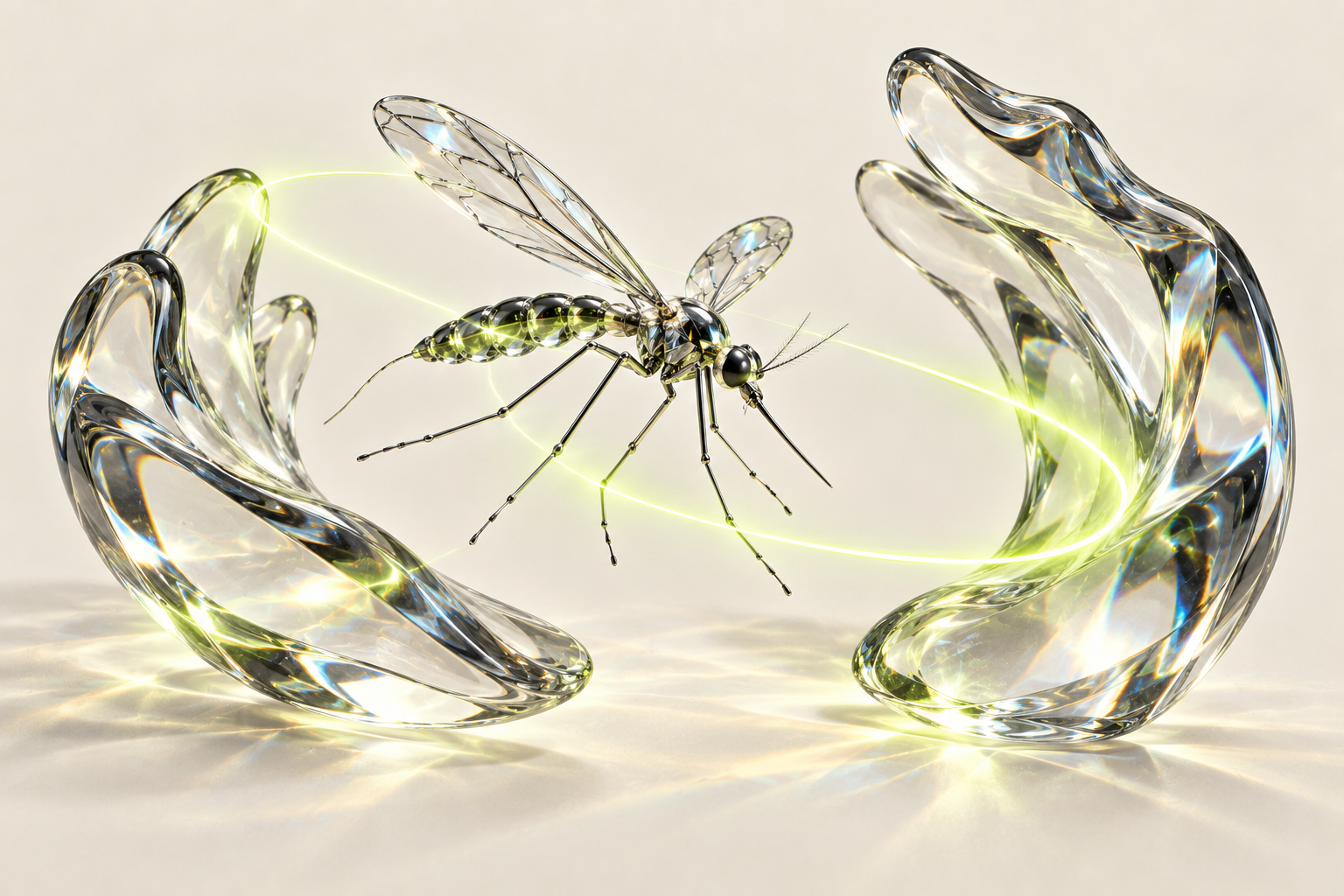
Mozzie is a seated mosquito-catching game for Meta Quest, built for the Meta VR Start Developer Competition 2026. You're at a desk at night, mosquitoes are coming through the window, and your hands are the controls.

Clap around one, grab it out of the air, or let it land and smack it with your other hand. Leave it too long and it starts taking your blood.

The game

The waves keep growing. Mosquitoes dodge, hide, rest on furniture and look for a still hand or forearm. Waving at one pushes it away; catching it takes a deliberate movement.

Catches earn supplies for the desk: spray, a swatter, a frog, a laser, even a Venus flytrap. The goal is to survive longer and climb the local high-score board.

So far

There's a playable Unity prototype, with tracked hands on Quest and a desktop version for development. The room, tools and scenery use original Blender models.

Work is still going into the feel of catching, the mosquito behaviour and the pacing of supplies. The virtual room is the working version; real-room passthrough is still experimental on newer headsets.

05In production

EU-hype

The idea

EU-hype is a song and one-minute film in development for the Euromaxxing competition. The idea is to connect Europe's history of discovery with the people building what comes next.

It moves from ancient Greece and Rome, through science and invention, into today's AI, robotics and engineering companies. The direction is optimistic, colourful and energetic.

The film

Athena guides the story through a painted world, moving between rooms and eras. Modern companies become cards on a map of Europe, before the ending opens out into a hopeful future city.

The storyboard and character direction are developed, with AI-generated keyframes in a consistent fresco style. These are the actual production stills; the finished motion edit is still ahead.

The song

The soundtrack has become a sung festival-house track: a soft opening, a rising groove, and the rallying cry “Accelerate Europe”.

The lyrics are locked and complete one-minute song auditions have been generated with ElevenLabs. The next step is choosing the performance and fitting the pictures to it. The song and video are still in production.

04Live

paperfeel.ing

The idea

Paper Feeling solves an annoying problem I've experienced: being asked to print out a PDF, fill it out, scan it, then send it back.

It simply takes your PDF then processes it in a certain way to make it look printed and scanned. This is a huge time saver and also saves paper and ink.

Status

It's live and the bet is that agents will soon experience this problem, so I'm building it to be an experiment in agentic tooling and pricing.

Thoughts

For such a low cost service, taxes and fees can add quite a bit to the gross price. I'm thinking how this could look in the future. Agentic blockchain payments might make sense here, but tax accounting will still be a problem on both sides (buyer and seller) at least in the EU.

03Experiment ended

Prism

The idea

Prism was an experiment in fully autonomous betting on prediction markets, using LLM-guided search and evaluations. Research a market, estimate the probability, compare it with the price, and decide whether there is an edge.

What happened

After four weeks, 200 market bets @ $5 each. the results did not show that our +EV calculations were accurate enough. Brier scores were worse than market-priced forecasts in most cases.

The infrastructure to reliabily consume data, parse, and make decisions was quite fun to build though!

Learnings

I should have been more opinionated about the infrastructure and tech stack from the beginning. I had to do a major refactor early on after Codex built something that would cost approx. $2M a month only in infra costs! The refactor tore it all down to something that would be max $100 per month in infra costs instead.

The reporting and logging were really good. They enabled accurate analysis while the pilots were ongoing, so I was making coding and adjustment decisions based on real data as it was evaluated/forecasted by the system.

02Live

generational

The idea

Generational is a personal financial portfolio app that imports data about financial assets into one portfolio view.

This was an upgrade from our previous Slack based bot that would simply post updates.

The app

Quite fun to build and design with Codex. It provides all the needed data in all the different ways that I want, with enterprise level security for access and data control.

Bonus is that the costs are negligible.

01Experiment ended

cambrian.fyi

The idea

Cambrian was a visual tool for non-objective search: a way to brainstorm ideas without knowing exactly what you were looking for.

It started by scratching my own itch: I was exploring different ideas to pursue.

Instead of converging on one answer straight away, it let an idea branch into different directions on a canvas. You could evolve a promising card, combine ideas, and keep the history of how you got there.

What happened

It was useful in some cases, but very hard to monetise that early in the lifecycle of an idea/startup. The metrics did not show much retention, and the consumer hook was not strong enough.

I didn't see signals of potential product-market fit that I was willing to double down on. I ended the experiment; the service went offline on 23 September 2026.

Learnings

Being useful in a particular moment was not enough. There needed to be a stronger reason to return, and a clearer reason to pay.

The visual exploration was interesting and what users liked the most. But the retention and consumer hook mattered more than adding further depth to the tool.

I shouldn't have wasted time building out the multi-player collaborative parts of the app, before data from the first users came in.